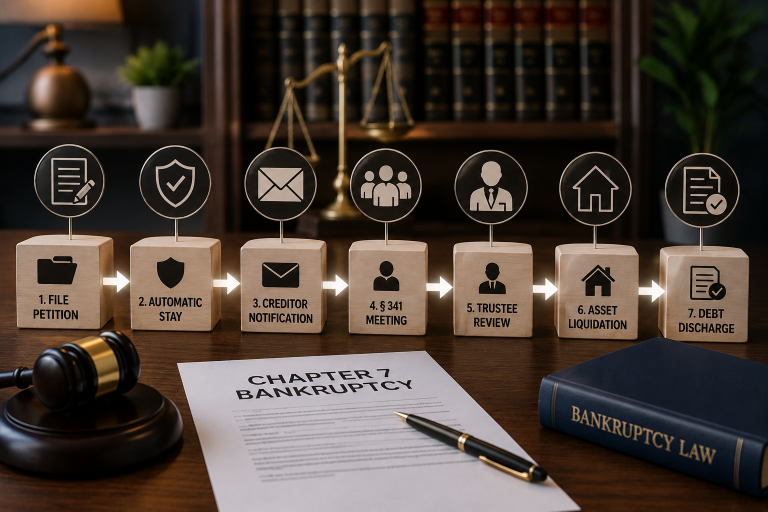
There comes a point when financial strain stops being a temporary inconvenience and starts reshaping your daily life. That turning point often leads people to search for clarity about solutions they rarely imagined they would need. Among those solutions, liquidation bankruptcy—known legally as Chapter 7—emerges as one of the most straightforward ways to move toward stability when unsecured debt becomes overwhelming.
Understanding how Chapter 7 works is not about fear or defeat. It is about finding a practical legal remedy that has helped millions of Americans rebuild with confidence.
What Liquidation Bankruptcy Actually Means
The term “liquidation” sometimes triggers concerns that everything you own will be taken away. The reality is more structured and far less dramatic. Chapter 7 focuses on identifying which assets are protected under bankruptcy exemptions and which, if any, may be sold by the court-appointed trustee. Most individuals filing in the United States keep all—or nearly all—of their property because exemption laws are intentionally designed to preserve a basic standard of living.
For those with few non-exempt assets, which is common, asset liquidation never becomes a major part of the case. Instead, the process centers on clearing unsecured debts and giving the filer a clean financial foundation.
How a Chapter 7 Filing Works
A Chapter 7 filing starts with the means test, a financial assessment that determines whether your income qualifies you for this type of bankruptcy. It evaluates income, reasonable expenses, and overall financial capability. This step ensures that Chapter 7 is used by individuals who truly need a liquidation-based form of debt relief.
Once the petition is filed, an automatic stay immediately pauses most collection efforts. The case is assigned to a bankruptcy trustee, who reviews your disclosures, examines any non-exempt property, and manages creditor communication. While the trustee’s role is supervisory, it also protects the integrity of the process so that every filer receives fair treatment under federal law.
How Chapter 7 Eliminates Unsecured Debt
The main purpose of Chapter 7 is the discharge of unsecured debt. Credit card balances, medical bills, personal loans, and overdue utilities are the types of obligations most commonly erased through this process. When these debts are wiped out, individuals often experience significant relief—interest stops accumulating, collection calls end, and the mental burden of constant repayment finally eases.
There are legal limits, of course. Certain debts like domestic support obligations, recent tax debt, and most student loans remain. But even with those limits, the elimination of large portions of unsecured debt often creates space for a healthier financial future.
The Role of Exemptions in Protecting Your Property
Bankruptcy exemptions are one of the most misunderstood parts of Chapter 7. These exemptions determine which assets you can keep, and they are typically generous. Depending on the state you live in, exemptions may include equity in a home or vehicle, clothing, household goods, retirement accounts, and personal items up to specified values.
Because exemptions cover most everyday property, many Americans complete Chapter 7 without losing anything through asset liquidation. This is why Chapter 7 is often referred to as a “fresh start,” not a financial erasure of your life.
Life After Chapter 7: Rebuilding With Lived Experience
Completing a Chapter 7 case marks the beginning of a new chapter. While it appears on your credit report for several years, your ability to rebuild is not frozen. Many people begin restoring their credit score sooner than expected through consistent payments on remaining obligations, careful budgeting, and using secured credit tools wisely.
Recovery also involves a shift in mindset—seeing Chapter 7 not as a failure, but as a structured legal remedy created to reset financial health when debts become unmanageable.
Navigating Bankruptcy With Guidance You Trust
Choosing to begin a Chapter 7 filing is deeply personal. It requires honesty, documentation, and a clear understanding of what the law protects and what it does not. Having a knowledgeable legal team can make this process less intimidating.
The attorneys at The Oracle Legal Group work with individuals facing heavy unsecured debt and guide them through the complexities of liquidation bankruptcy with clarity and discretion. From explaining exemptions to ensuring filings are accurate and timely, the goal is to help clients move forward with confidence.
When Liquidation Bankruptcy Becomes a Path Forward
Liquidation bankruptcy is not about giving up. It is about allowing the law to provide relief when unsecured debt becomes too heavy to sustainably carry. Through the structure of Chapter 7, the protections of exemptions, the oversight of a trustee, and the final discharge of qualifying debt, individuals can begin again with stability and purpose.
If you are exploring whether Chapter 7 might be the right step for your financial situation, informed legal guidance can help you understand your options and make decisions with clarity.